
Build SEO Systems That Work for You!


Hello Riddlers!
Before we dive into today’s topic, a quick word from today’s sponsor:
You Don’t Have a Marketing Strategy Problem. You Have an Execution Problem.
Most marketers know what needs to happen. The bottleneck is always doing it!
Writing the content, fixing the tech issues, running the ads, building the links, you know the drill...
Search Atlas changes that. It’s the agentic marketing platform that saves you time by helping execute your vision and not just giving you suggestions that waste your time.
A team of AI agents at your disposal that autonomously execute across your entire marketing operation:
SEO & technical fixes ✅
Content created and published ✅
PPC managed and optimised ✅
Press Release Writing and Distribution ✅
LLM Optimization ✅
Marketing Execution ✅
Your job becomes deciding what to grow. Search Atlas handles the rest.
73 Marketing Tools. 1 Platform. 1 Payment. 0 Manual Execution.
SEO can be overwhelming
Every day there’s a new tactic, another “must-do” strategy, constant shifts in search behavior, and never-ending updates from Google. Just when you think you’ve figured things out, something changes again. It’s a lot for one person to keep up with.
If there’s one thing I learned that works like magic, it’s consistency.
Remember when John Muller said this:

He was absolutely right, but this is not just for technical SEO, it’s for everything in SEO. Your best way to winning, is to stay on top of things.
And when I say “stay on top of things,” here’s what I actually mean:
Search trends
New tactics
Changes happening on your website (and the bigger the site, the messier this gets)
and more!!!
That’s already a lot to juggle—and that’s exactly what I want to chit-chat with you about today.
Well… that, and how one simple system helped me catch something worth fixing.
The headspace
I had a recent meeting with a co-worker that inspired me to build a simple automation on Google sheets. I created a simple script that pulls latest URLs added to a website through the sitemap, their title tags, status, title length, etc….
I then started to create pivot tables to analyze the data
And that’s when something clicked 💡
It wasn’t anything groundbreaking, but it was a small, easy-to-miss fix that was definitely worth addressing.
I can’t go into the specifics, but it was one of those moments where you realize the issue wasn’t complexity… it was the mental load that prevents you from noticing opportunities. [paid newsletter subscribers can access this sheet with instructions to use it at the end of this article]
I came across this post recently on LinkedIn from Jonathan Boshoff, and he had a similar experience!
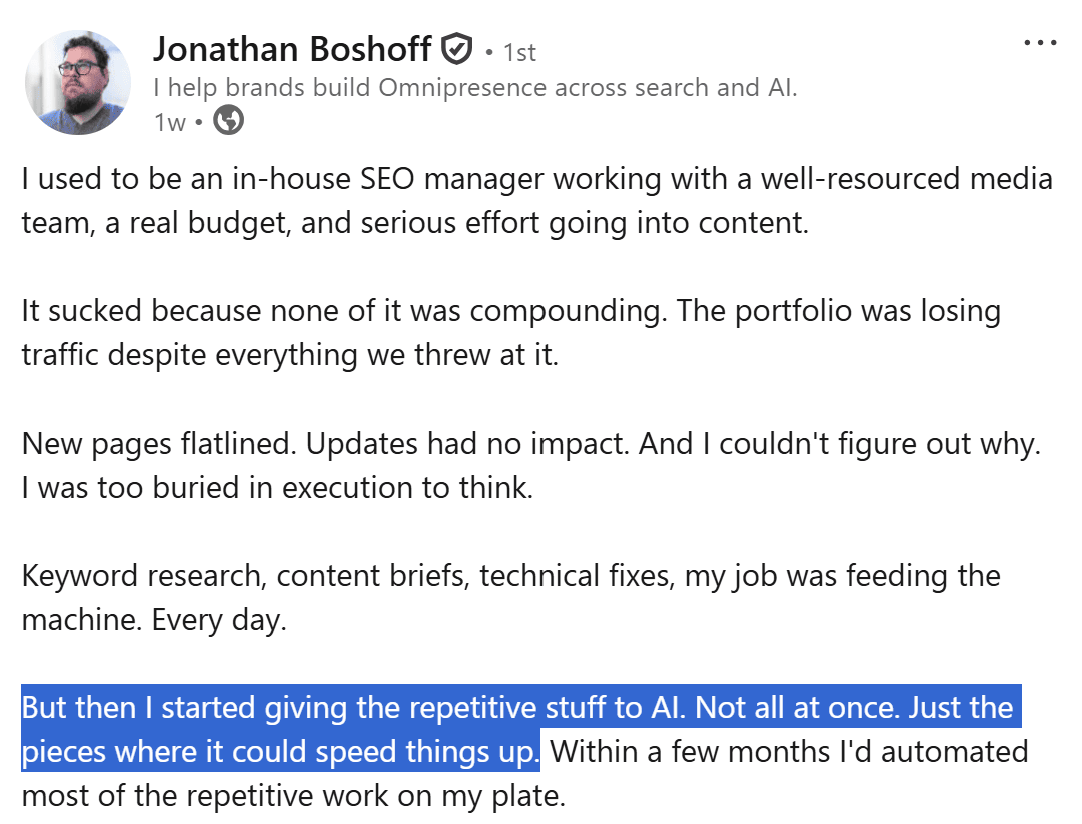
Long story short, Jonathan automated the repetitive work, and once he automated enough, he had free headspace, to look in-depth in more SEO issues, and guess what? He found a major opportunity that grew organic traffic from 160k to 1.7 million.
Can you imagine?
So we should just automate everything?
“So… is that what you’re saying here, Sara? Just automate stuff?”
Naaaah.
What I’m trying to say is, we need to build systems that work for us!
Automation is just a piece of that, not the goal.
Build systems (and yes, some automation within them) that:
Free up your headspace for deeper, more important thinking
Allow you to stay consistently on top of things, without constantly juggling sources or manually digging through data.
A framework to finding automation opportunities
We talk a lot about automation in SEO, and very less about what to automate. So here you go!
If you’re looking to start automating today to reap the benefits, here’s how you should do it:
Step 1: Start with Your Business Goal
☐ Write down your main business goal (e.g., grow website traffic).
Step 2: List High-Level Tasks
☐ Break the goal into key tasks that drive it (e.g., content, track performance, competitor monitoring, etc…).
Our goal here is visibility, i.e. having a simple way to quickly check the status of the tasks that drive your business goal, like how many pieces of content you publish each month and how well those new pages are performing.
Step 3: Break It Down Further
☐ Break the high-level key tasks, into subtasks. (e.g. for content: writing content, promoting content, etc…)
Step 4: Spot Opportunities
Identify tasks that are:
☐ Repetitive.
☐ Time Consuming.
☐ Bonus: follow clear IF/THEN logic. Rule-based tasks sound like IF we create a new blog, THEN we need to share it on social media or if a competitor creates a new blog, I need to be notified.
☐ Bonus: frequently cause errors when done manually
Example
If you’re wondering how this framework would look like in action, here’s a simple example just to demonstrate the process:
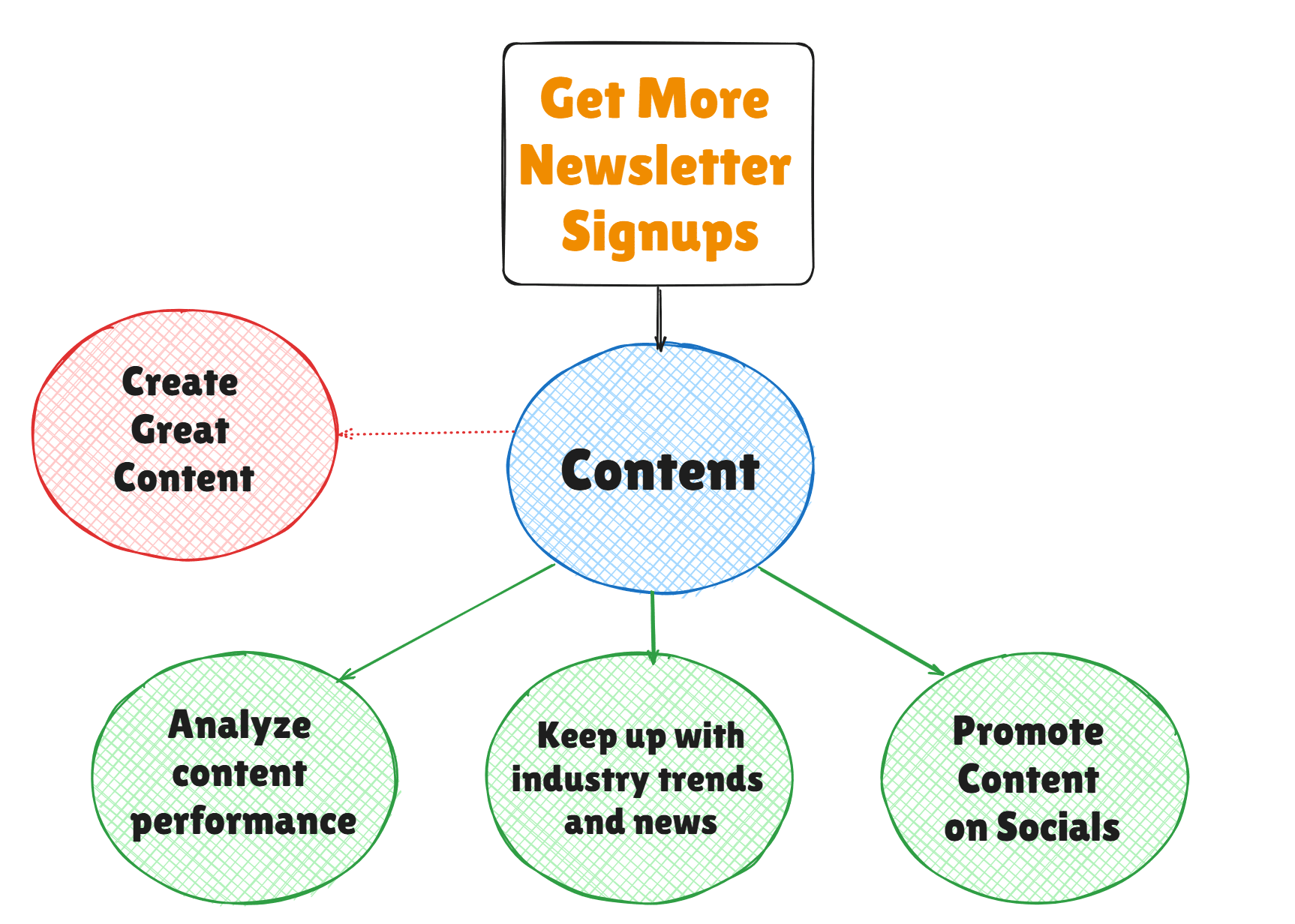
My business goal: get more newsletter signups
Tasks to support that goal (many, but for simplicity I’m focusing on content)
Zooming in, under the content category there are
Creating great content
Analyzing content performance
Keeping up with industry trends and news to be able to create great content
Promote the content on socials once created
Now which of those tasks are repetitive, time consuming and possibly prone to errors when done manually or follow a clear structure? I’d say everything except creating great content.
—> therefore I should be automating everything EXCEPT the content creation!
And That’s a Wrap (Almost 😄)
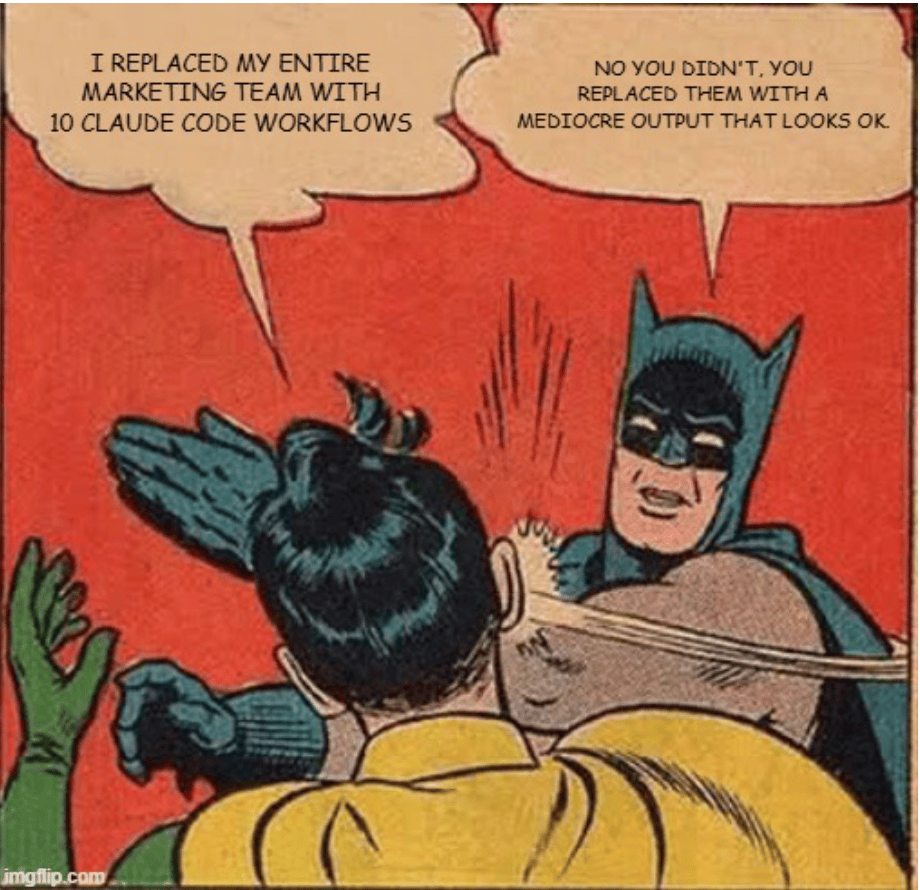
Automations in SEO some how became synonyms with content creation and programmatic SEO, that’s definitely not the use case I’m promoting. Nor I am promoting the “I replaced my entire marketing team with [place an automation tool]…” narrative.
Automation is the key to staying consistent and delivering solid results, and the framework above shows you exactly how to make it happen!
That’s that for today folks and see you next newsletter!
Support the Riddler!
Sign up for my newsletter if you’re not already.
Share the newsletter and invite your friends to signup. Help me reach 2k signups by end of 2025 please 🙂
Provide feedback on how I can make this newsletter better!!!
If you’re an SEO tool or an SEO service provider, consider sponsoring my newsletter. I’m also open to other partnership ideas as well.
Disclaimer: LLMs were used to assist in wording and phrasing this blog.
Paywalled content below this point that includes the Google sheet template mentioned above.
Keep reading with a 7-day free trial
Subscribe to SEO Riddler by Sara Taher to keep reading this post and get 7 days of free access to the full post archives.